CONTEXT
At RBC Wealth Management, client onboarding is a critical operational backbone—enabling Advisors and Associates to create client profiles, open accounts, and ensure KYC compliance. However, the experience had become a bottleneck. Fragmented systems, manual workarounds, and unclear workflows were slowing teams down and introducing risk, ultimately impacting both efficiency and client trust.
My Role:
Outcomes:
354
hours saved for Advisors and Associates (over 6 months).
74
hours saved for Branch Operations.
76%
reduction in KYC reviews required annually
70%
decrease in review and approval time for Advisors and Associates
20%
adoption growth was achieved in the first 3 months, rising from 73% to 93%.
Key Challenges I Navigated
1. Operating in a Complex Regulatory Environment
Balancing strict compliance requirements with usability required close alignment with legal, risk, and operations teams.
2. Driving Design Maturity
Teams were initially delivery-focused, with limited emphasis on UX. I introduced research-driven decision-making and co-creation practices to shift this mindset.
3. Changing Deeply Ingrained Behaviors
Advisors and Associates relied heavily on legacy workarounds. Driving adoption required not just better design, but trust, clarity, and change management.
Clarifying the Problem Space
I led a research-driven discovery phase, partnering closely with UX Research to ground decisions in real user needs.
Conducted 20+ interviews with Advisors, Associates, and stakeholders
Synthesized findings into key themes and opportunity areas
Prioritized initiatives based on impact, feasibility, and business alignment
Facilitated co-creation sessions to align stakeholders early and often
This approach ensured we weren’t just improving screens, we were redefining the workflow end-to-end.
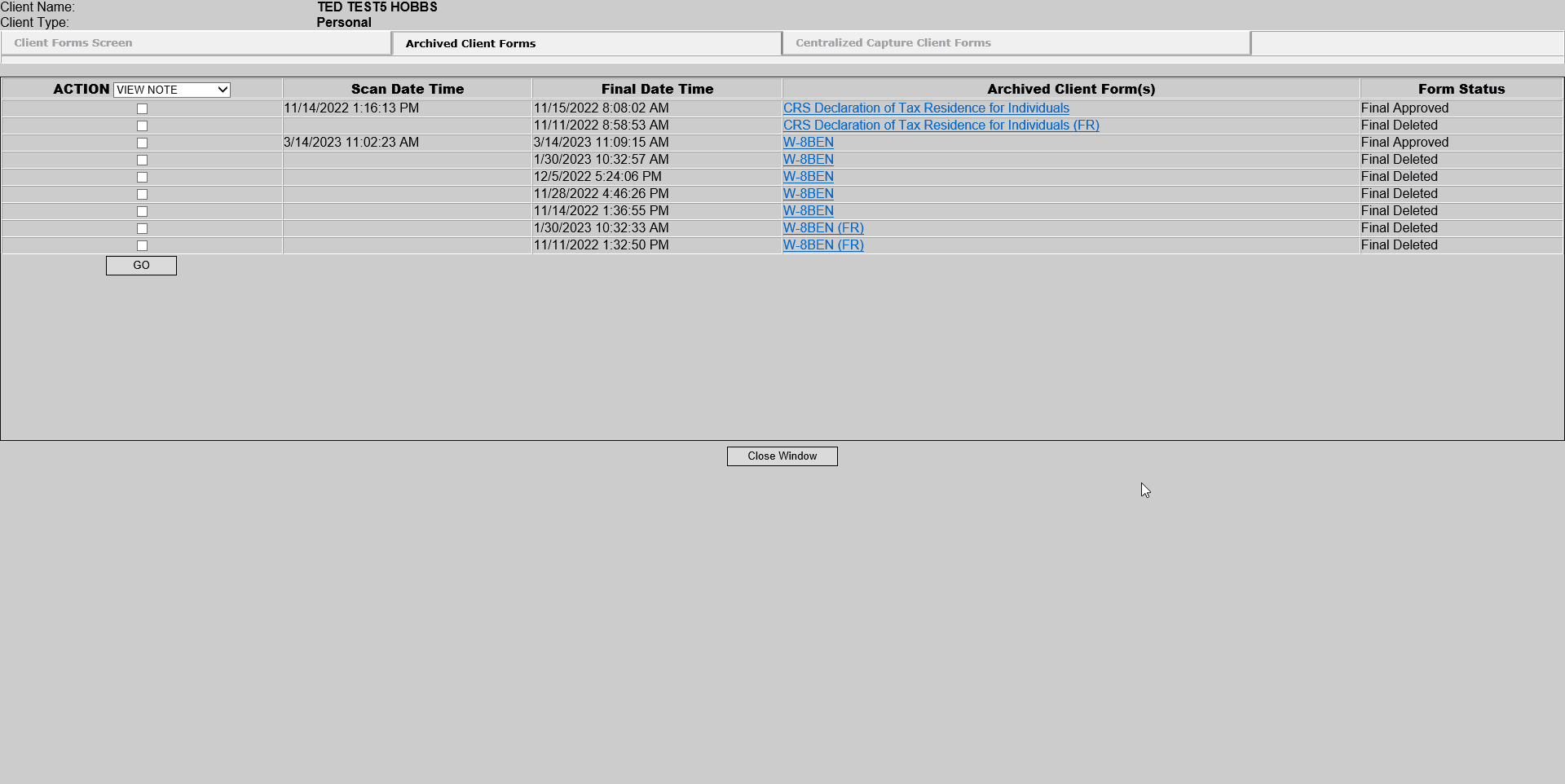
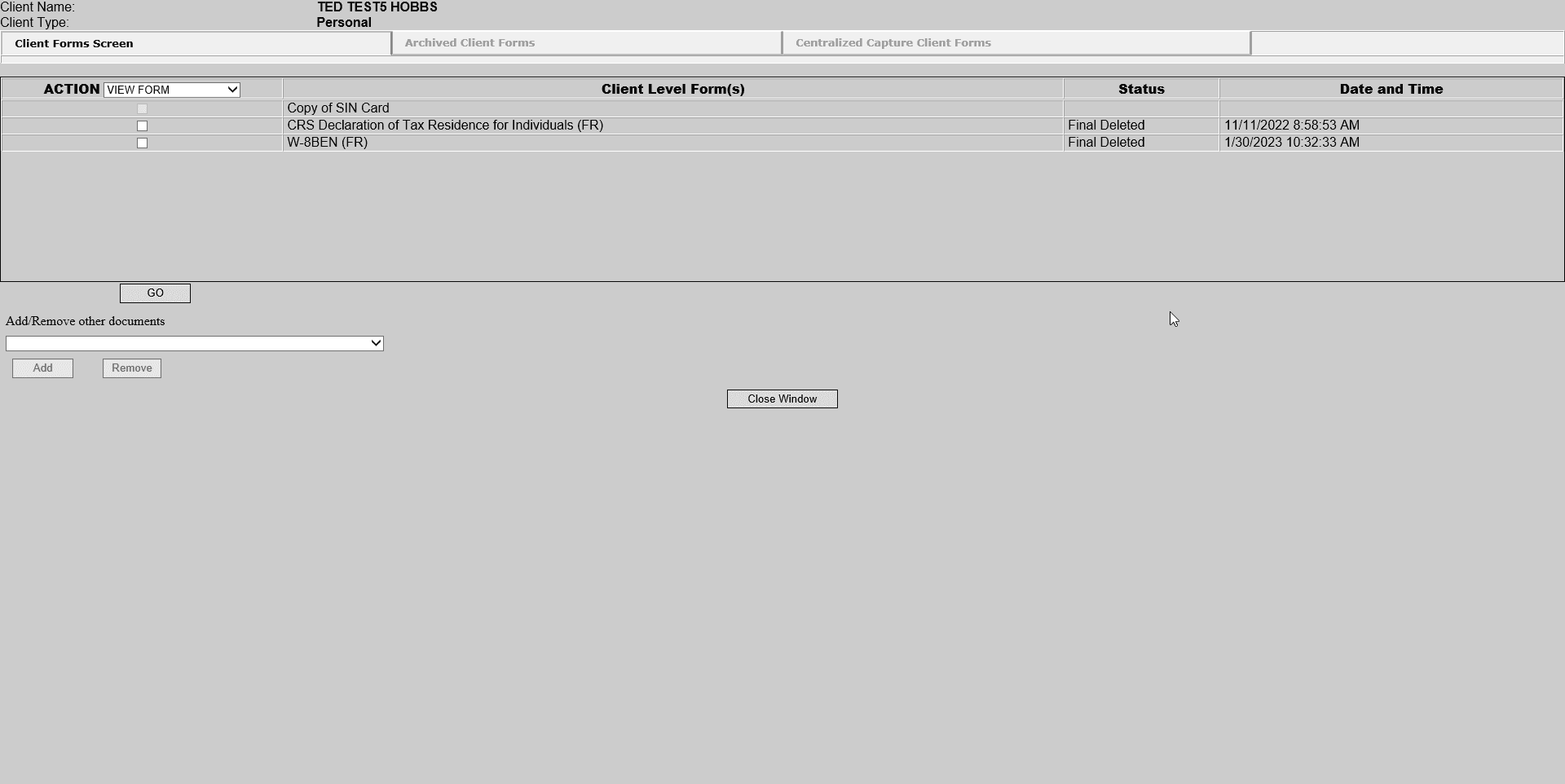
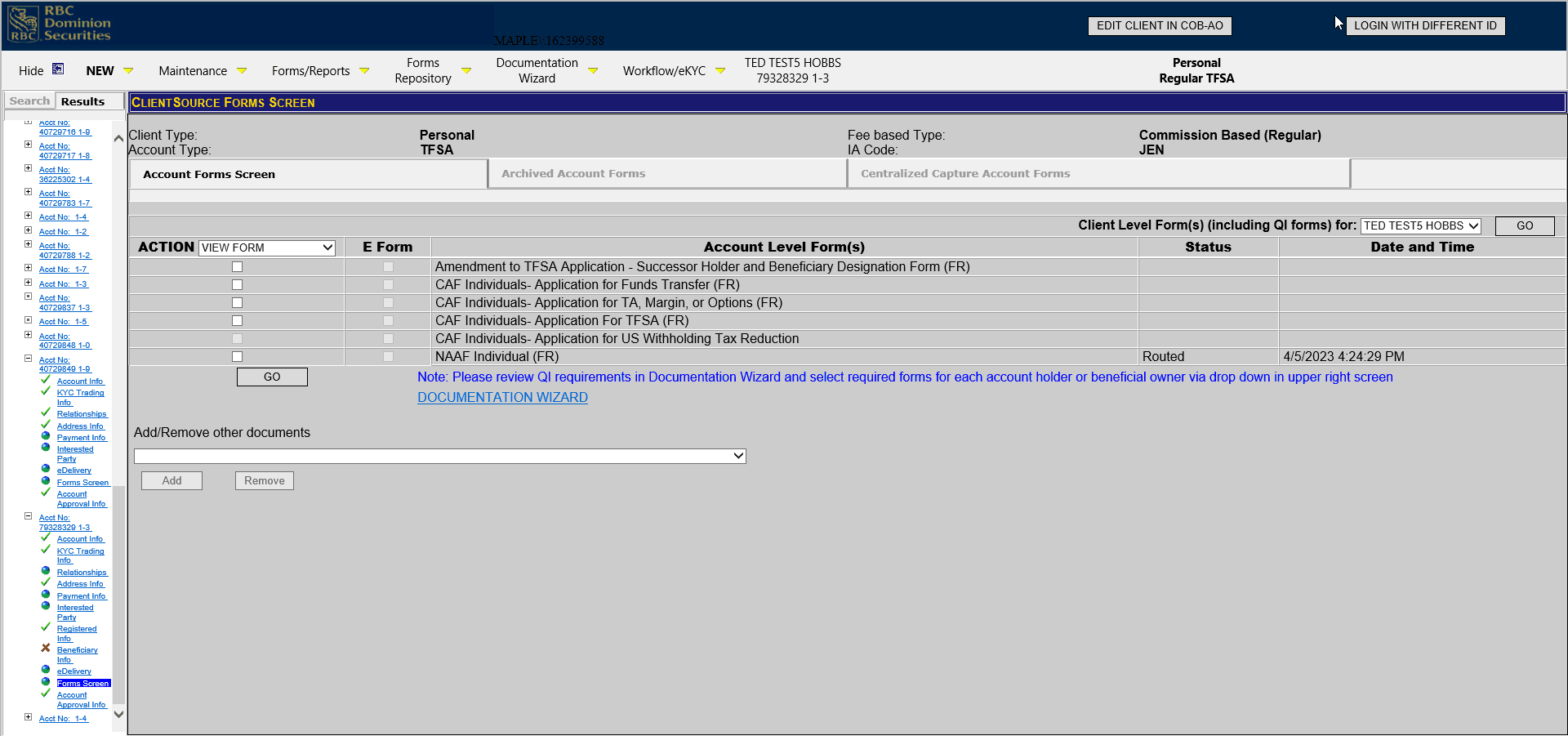
Before:
The original tool felt outdated and clunky, like an old MS-DOS banking system. It was hard to navigate, prone to manual errors, and lacked clear inputs or feedback. Users often felt confused, frustrated, and relied on workarounds to get things done.
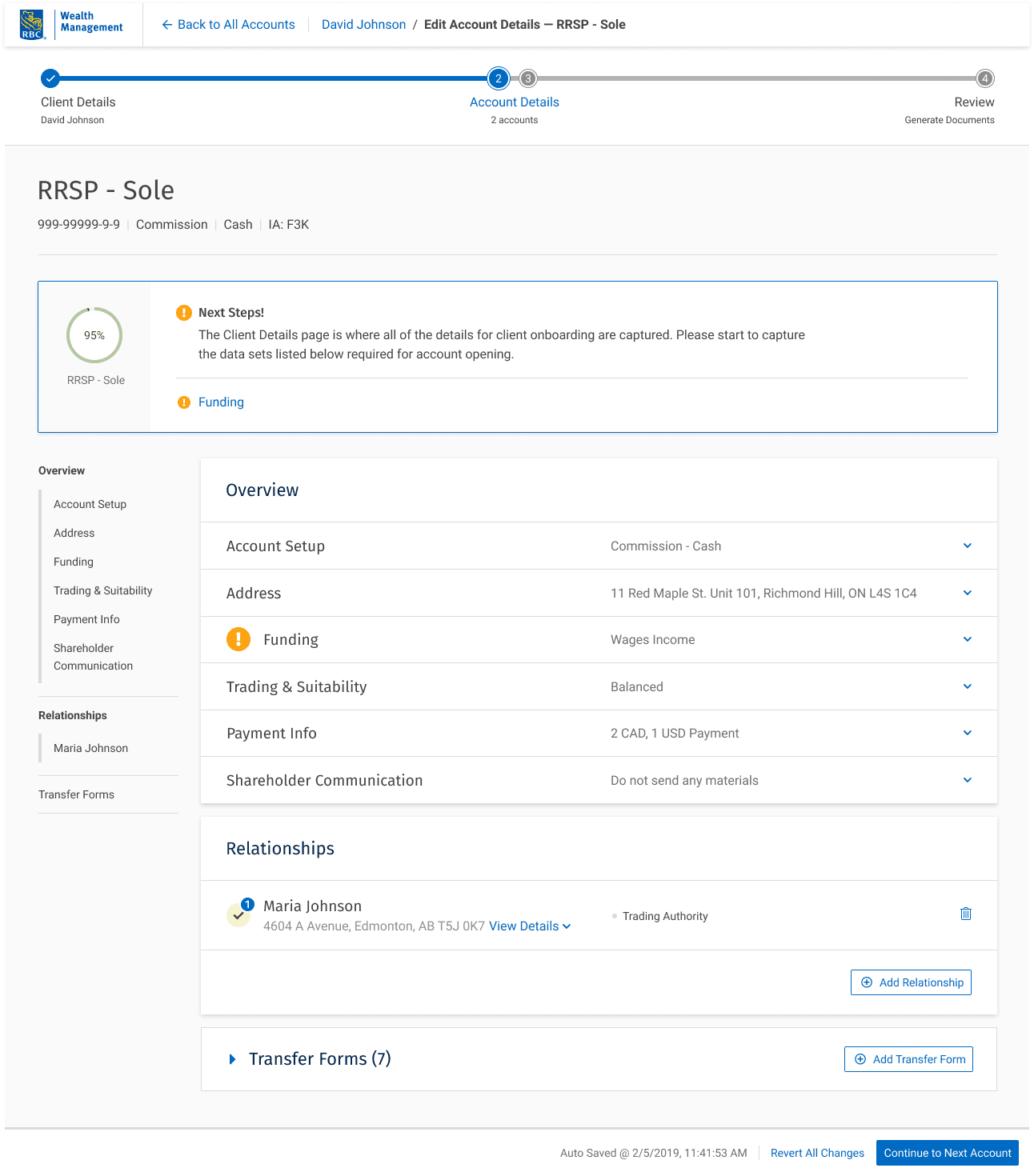

A real-time progress tracker gave users visibility into each step, while a completion check ensured all required fields were filled, helping maintain compliance and avoid delays.
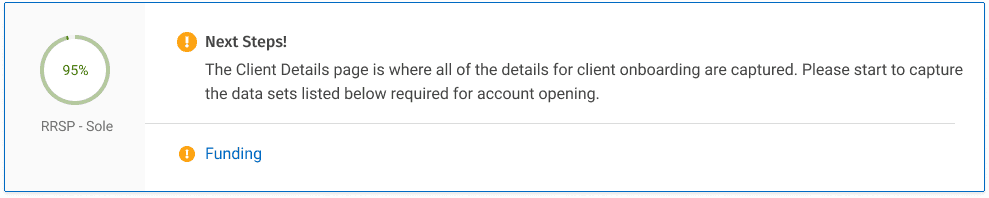
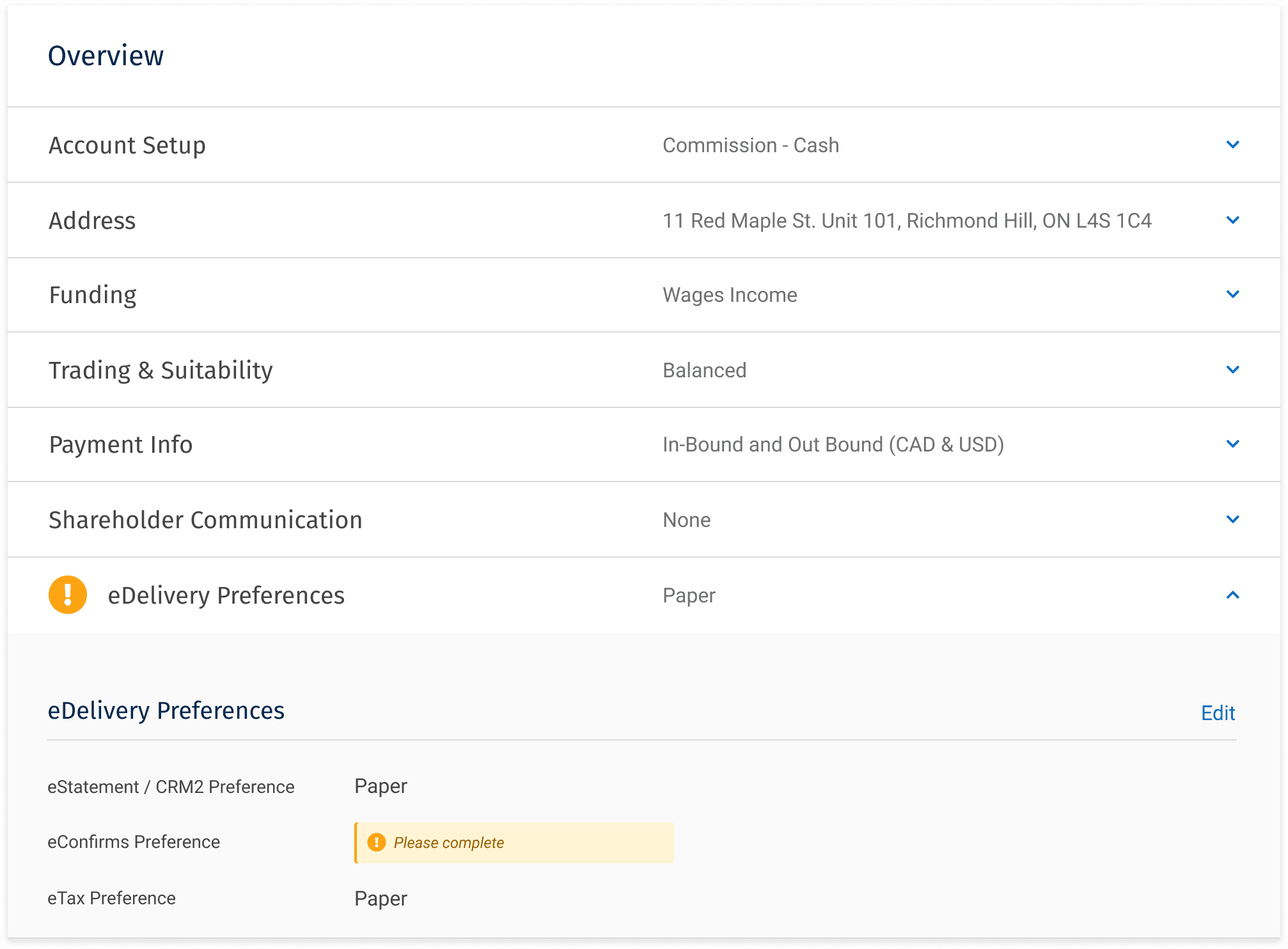
Dynamic field validation helped catch missing or incorrect information early.
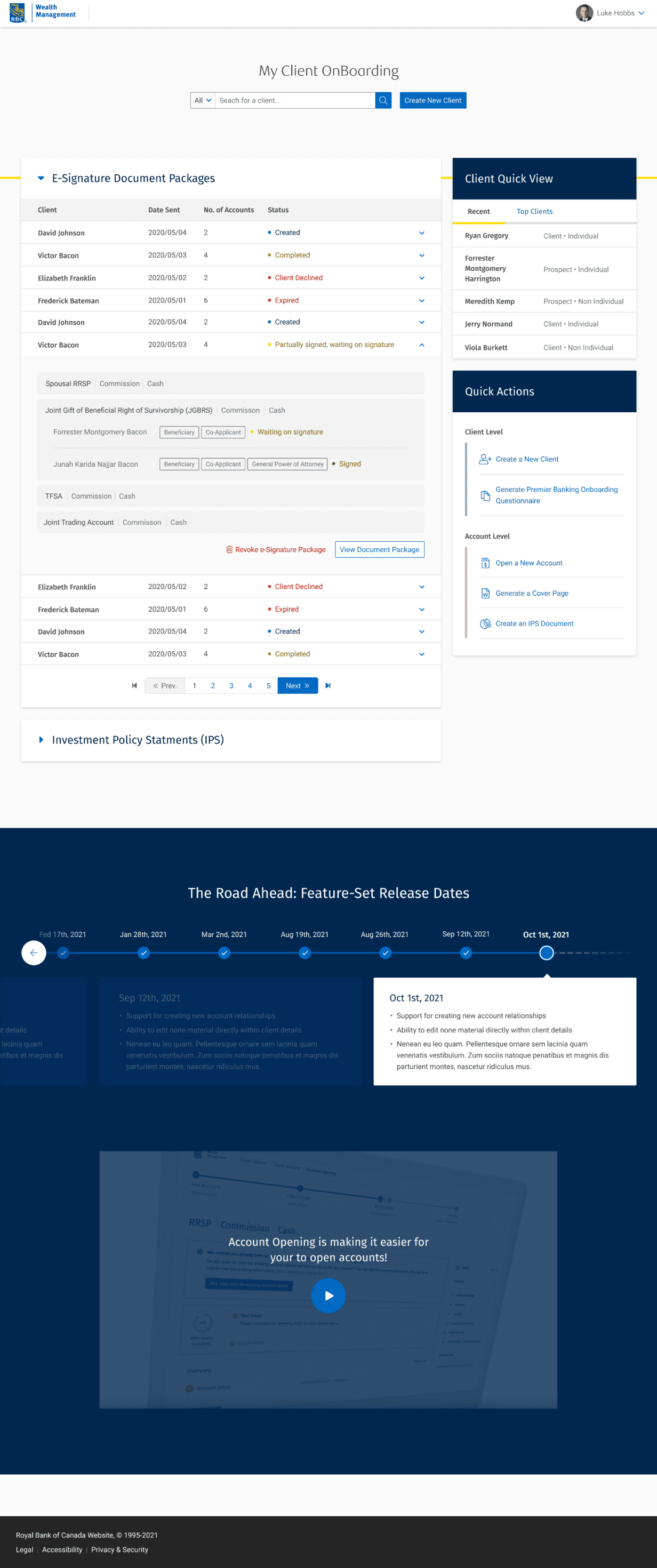
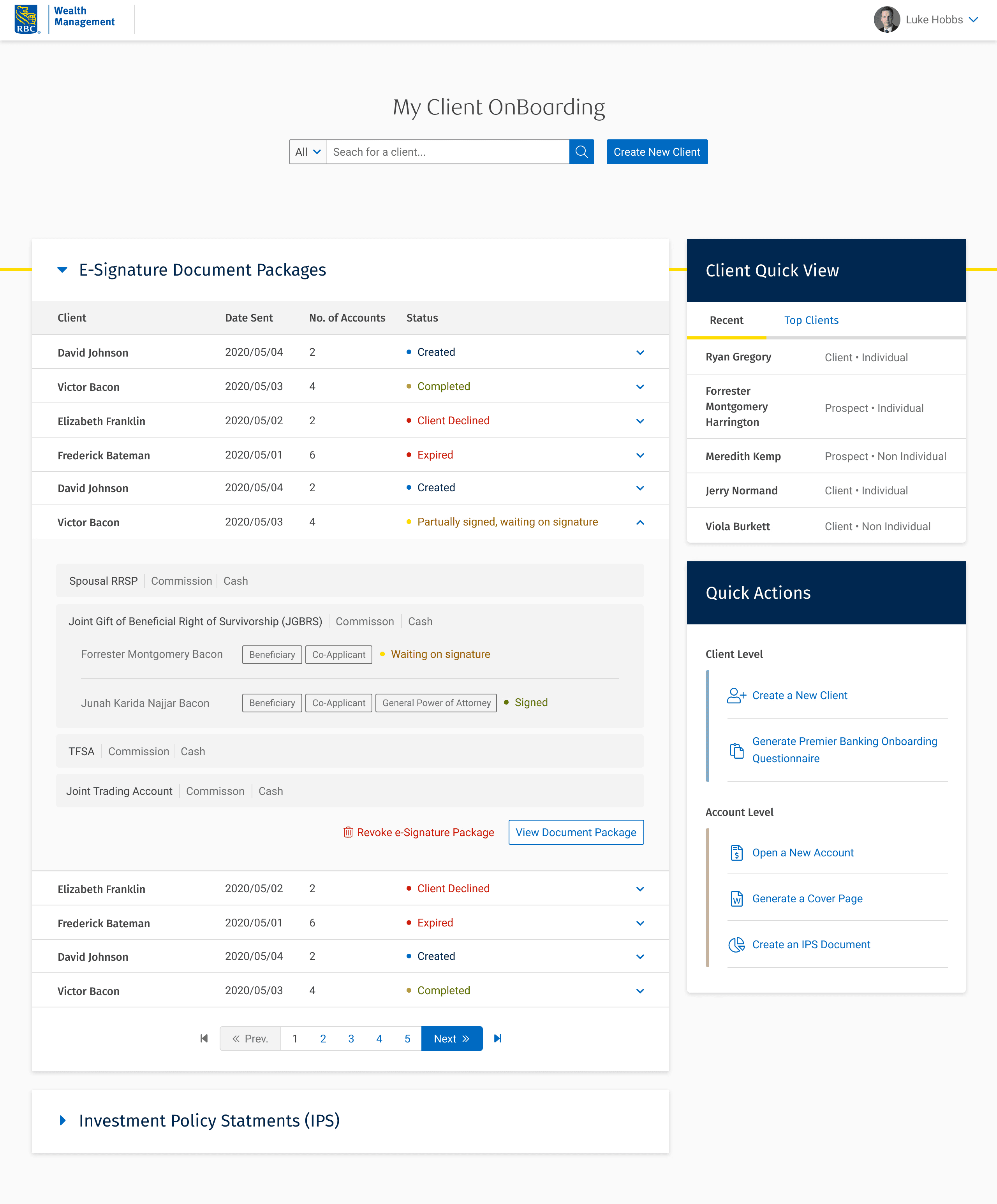
The homepage was designed as a central hub to help users navigate their work with confidence. To build trust and support adoption, We added a consistent spot for real-time updates, so users always know what’s new and never feel caught off guard.
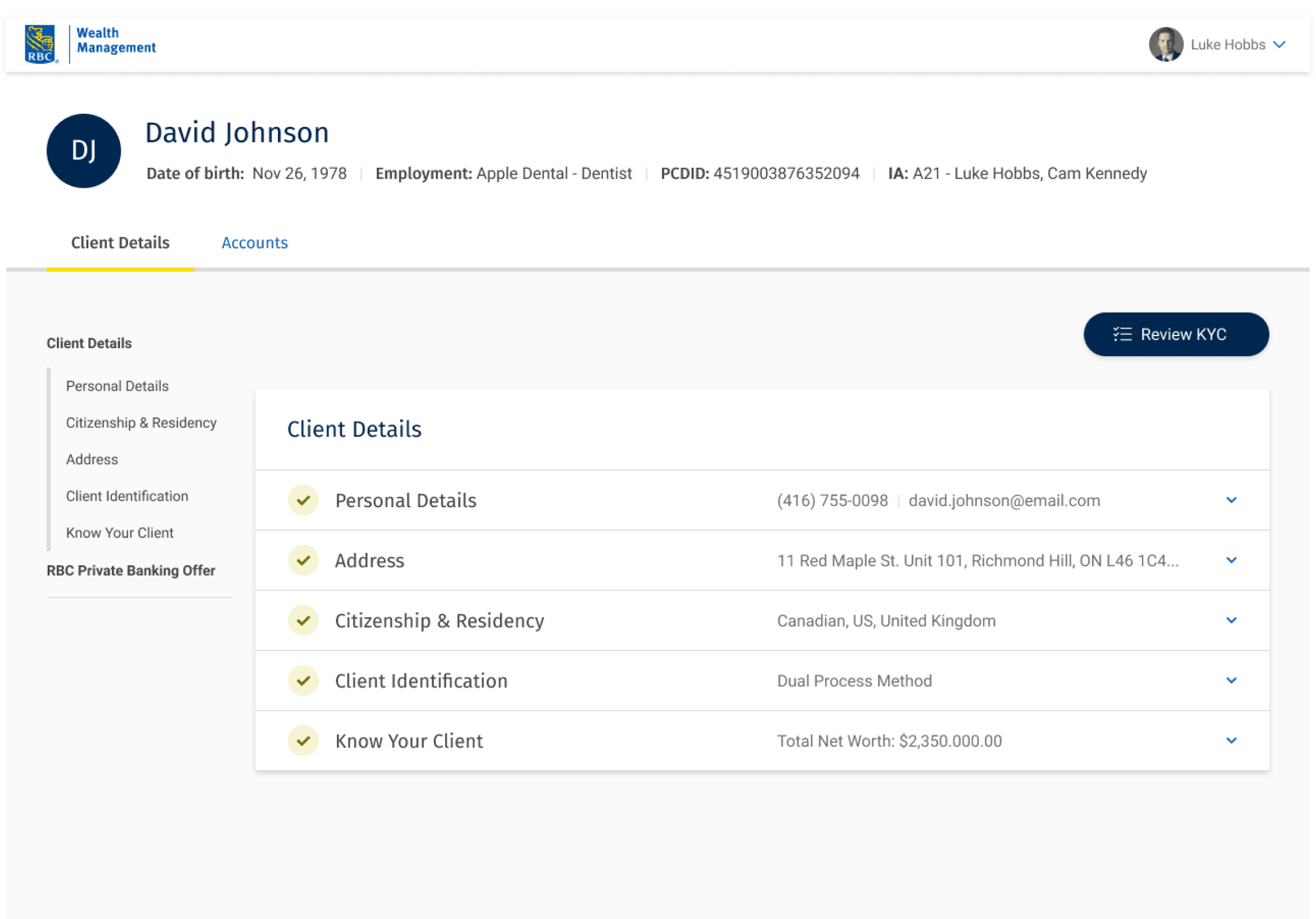
We simplified the KYC submission by moving it to the client profile level, so instead of submitting it for each account, users can now do it once, faster and more efficiently, right from the profile.
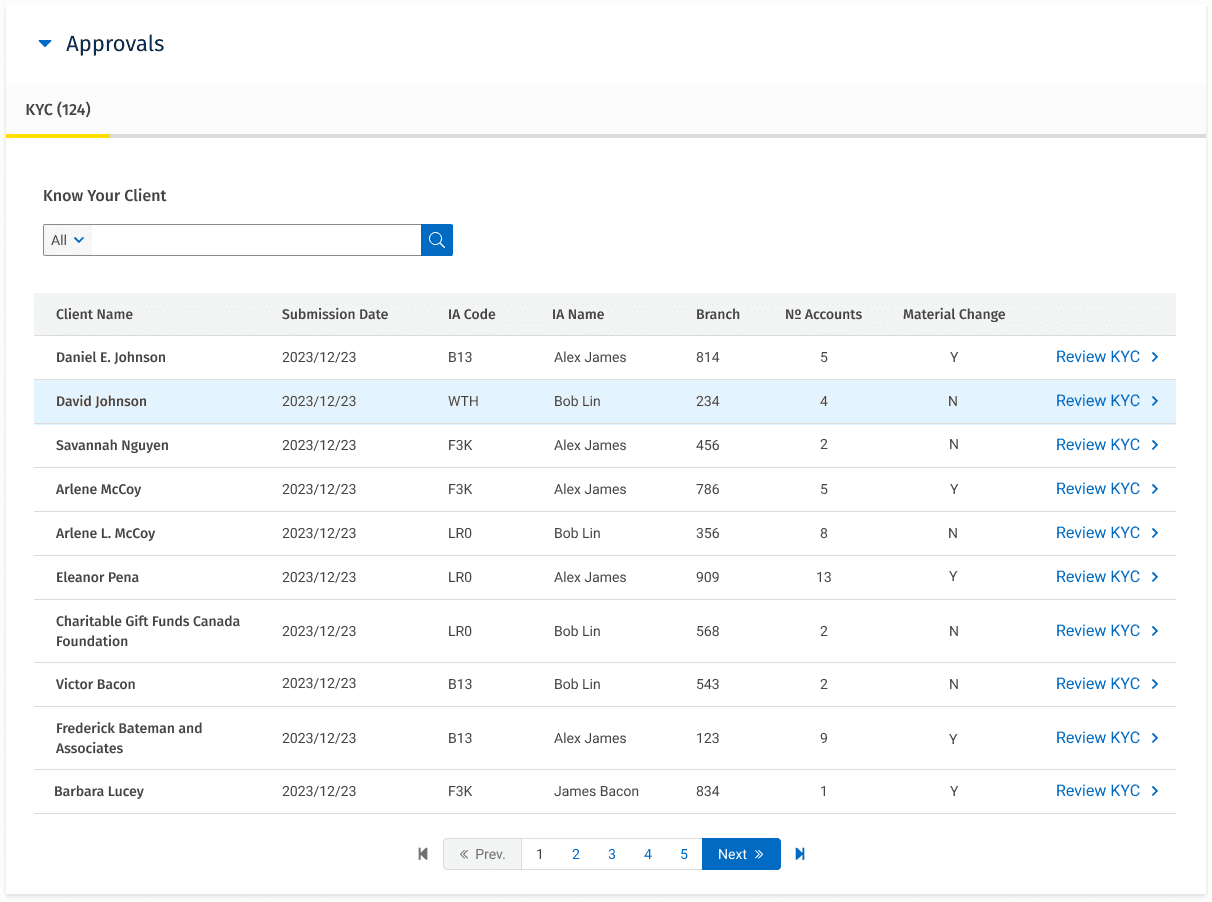
Users now have an intuitive way to review and approve KYC data through a streamlined dashboard that makes managing pending approvals fast and easy. They can also search for a client and make any necessary updates based on their role, all in one place.
CONSISTENCY ACROSS PLATFORMS
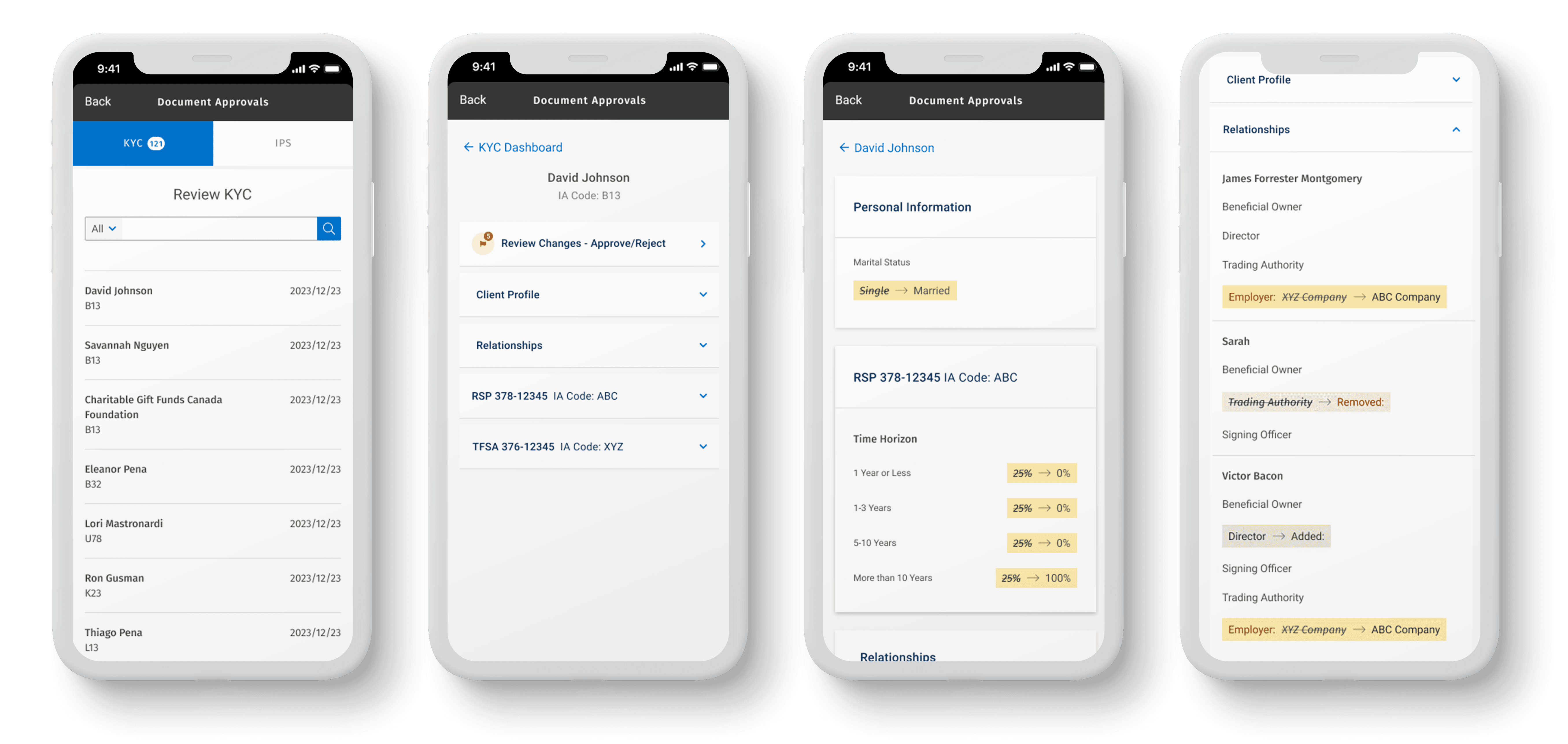
The KYC approval often includes multiple devices. We designed an experience that worked on desktop and was integrated with the global mobile app used by advisors. Users could start approving on a laptop at work and finish booking on a smartphone on the go. The app also remembered users’ about expiry dates, pending approvals, and material change information. A personalized approach meant a better, faster experience.
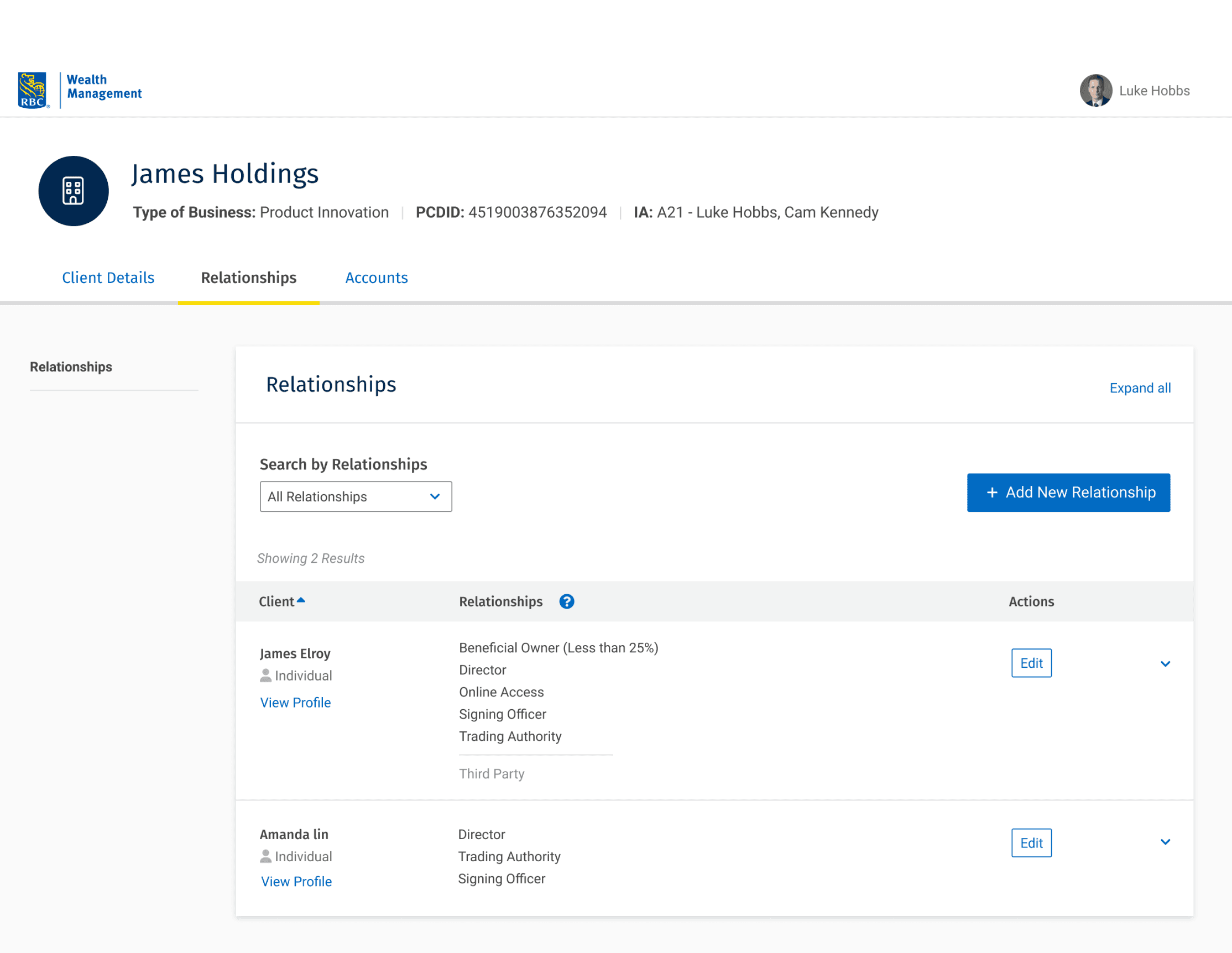
The COB app lacked a centralized way to manage client relationships, causing confusion and inefficiencies, especially with the addition of Private Corporation clients.
Setting up relationships became complex and inconsistent.
We started by mapping core relationship flows and aligning early with stakeholders, which clarified expectations and laid a solid foundation for design and research.
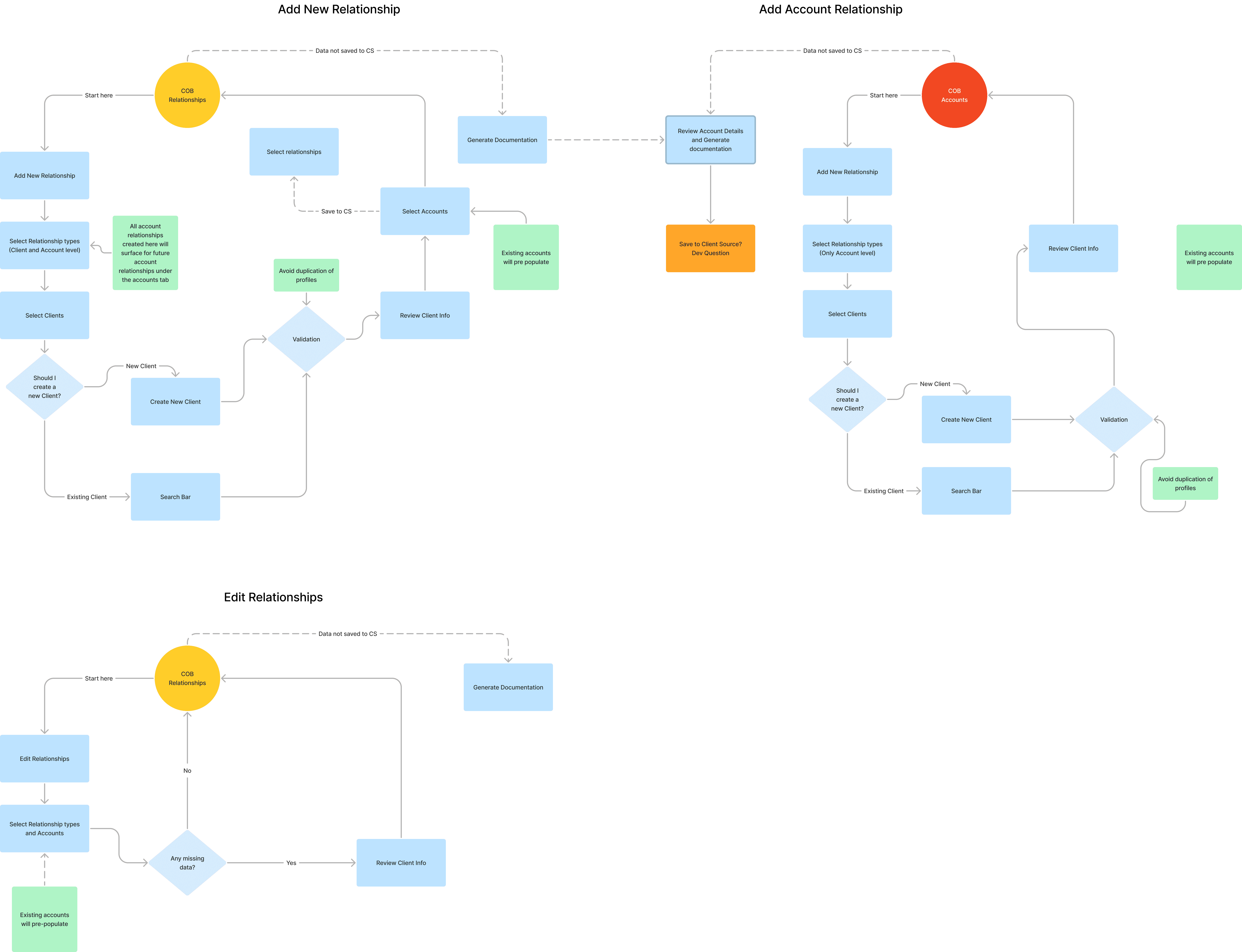
All relationship tasks are now centralized, eliminating repetitive steps for clients and accounts.
We redesigned the e-sign flow so advisors can send all documents, account details, and changes directly from the app, no need for external tools.
Clients access their documents through two-factor authentication and can easily review and sign them.
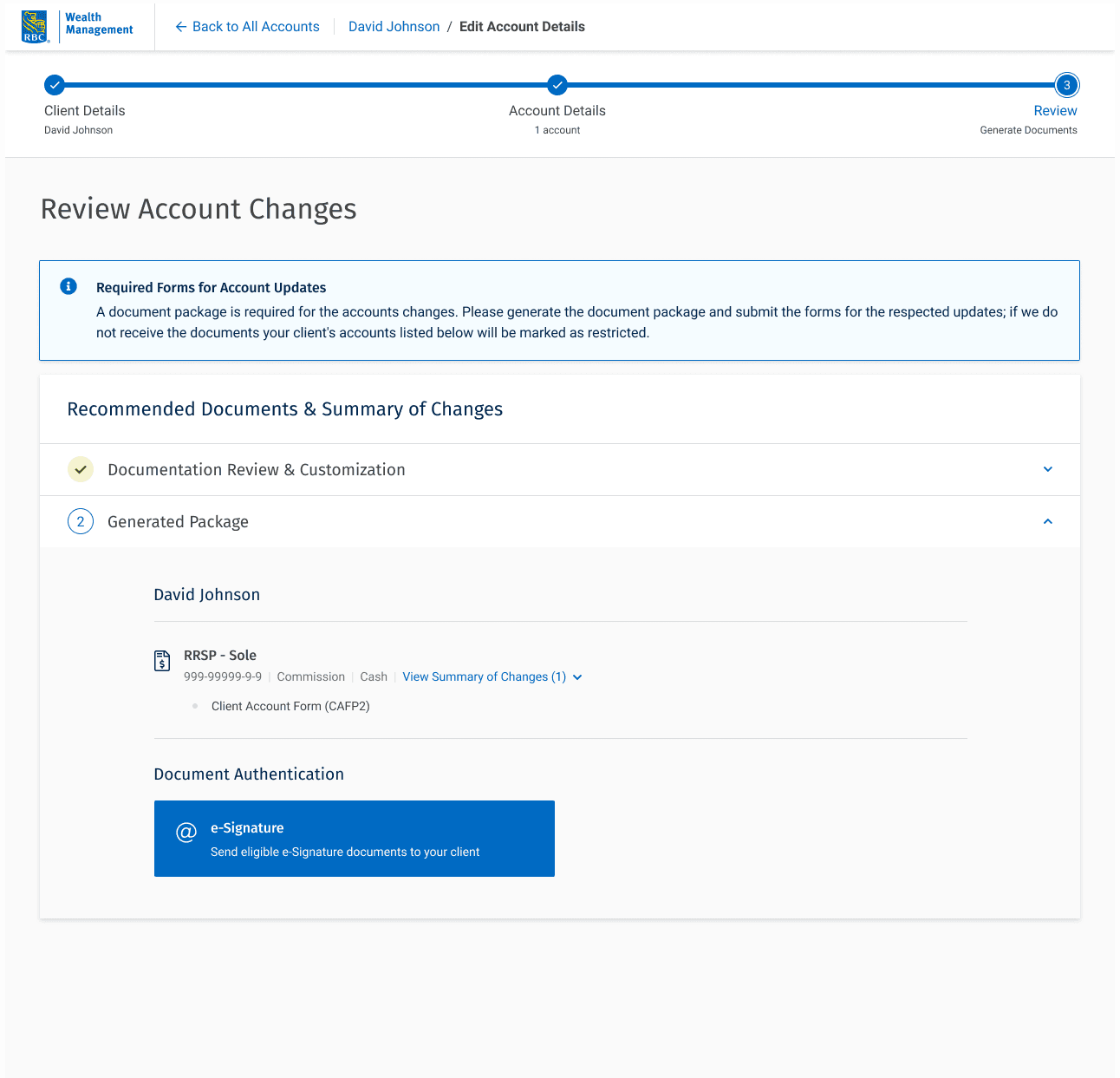
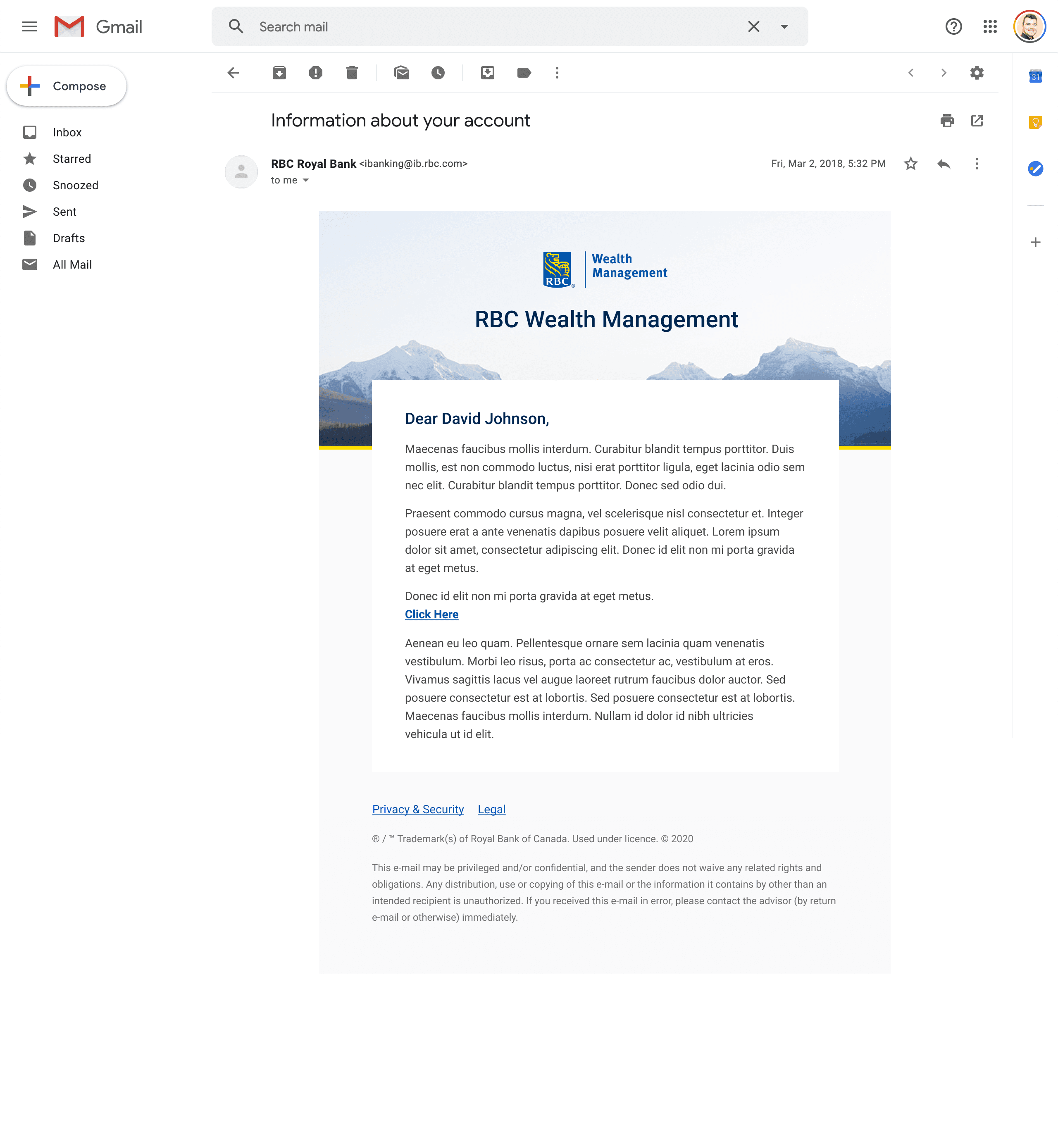
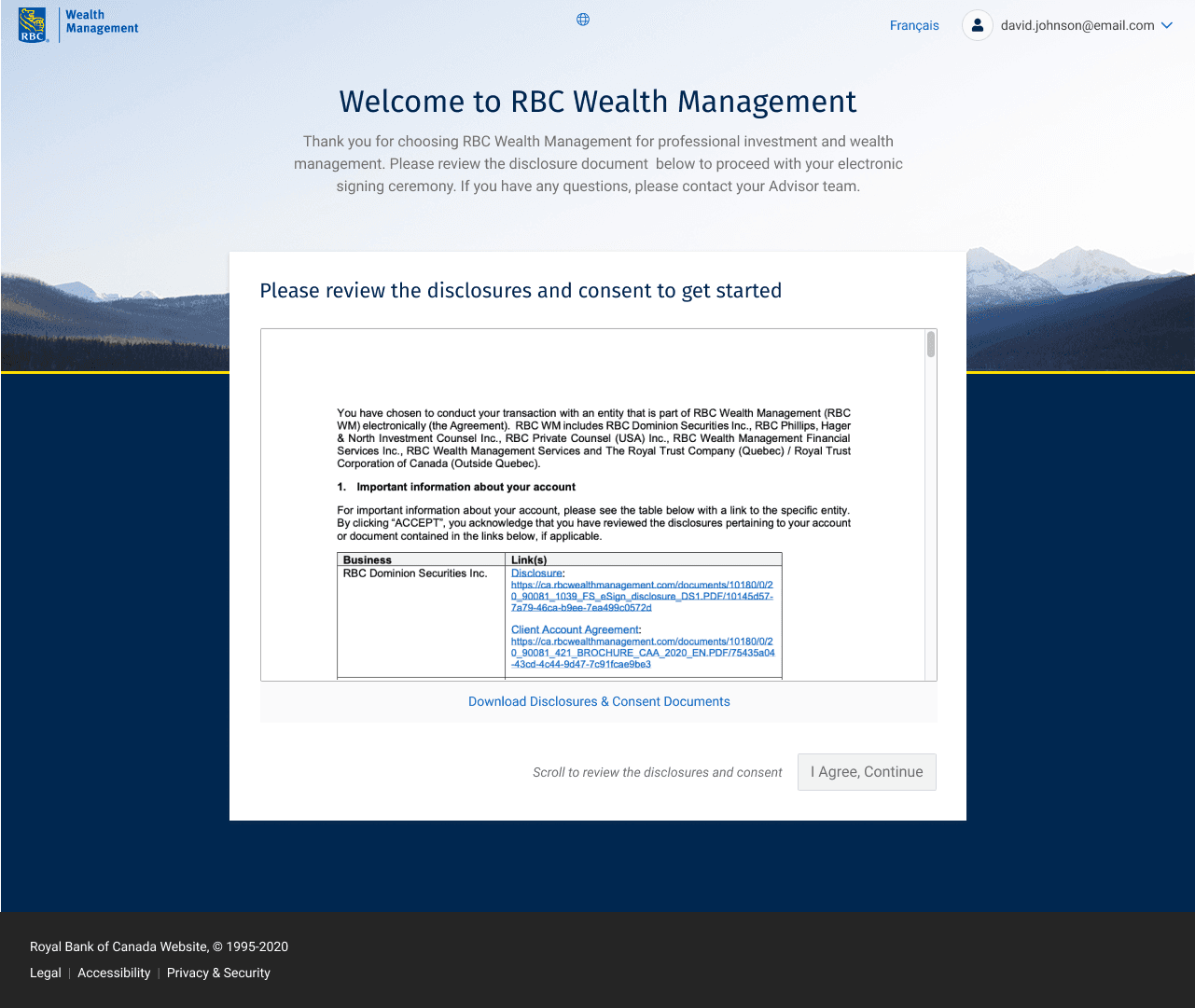
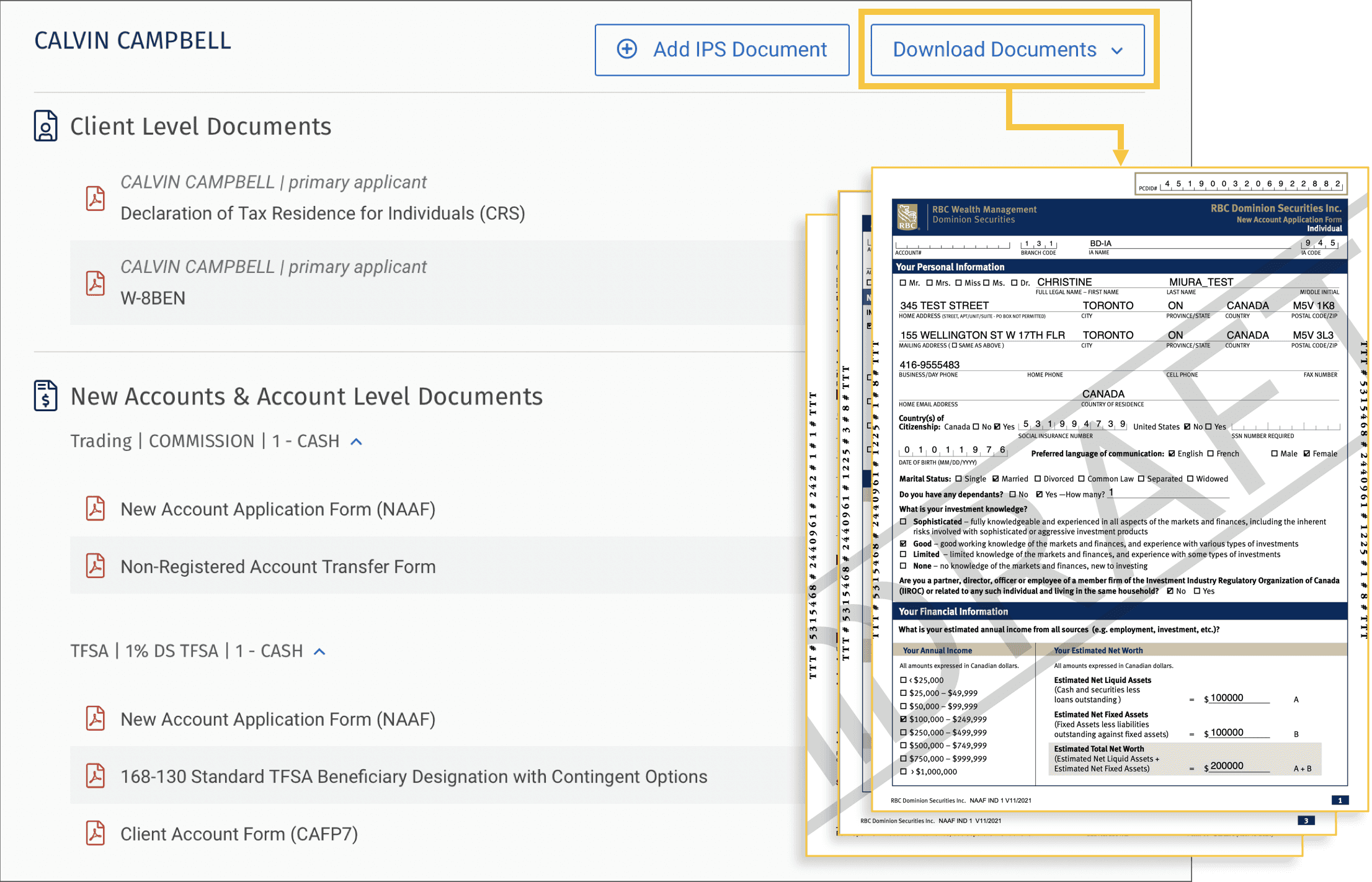
A one-click download organizes everything by account type, making the process simple and efficient.

IMPACT
The new COB platform has redefined how RBC Wealth Management onboards clients, boosting operational efficiency, reinforcing compliance, and strengthening client trust.
The result: a streamlined, guided experience that reduces friction, minimizes errors, and builds user confidence at every step.
Initial adoption reached 73%, and after implementing key enhancements and new journey flows, adoption rose to 93%.
Increased Advisor and Associate satisfaction in 24% with onboarding experience.
Reduced KYC reviews from 500,000 to ~120,000, significantly lowering operational overhead.
Sharp decrease in documentation errors and manual rework.
Most importantly, the project helped foster a culture shift within the organization, embedding a more design-led approach to solving business challenges.